
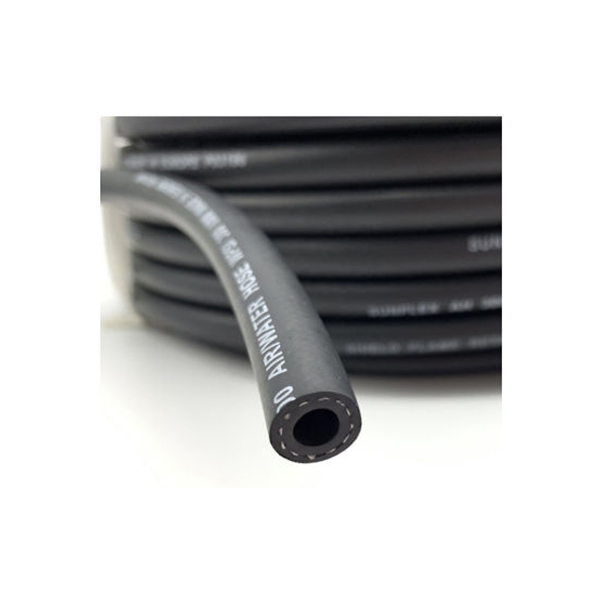
Rubber Hoses in Kenya
| Specification | Details |
|---|---|
| Product Name | Rubber Hose |
| Product Category | Industrial Flexible Hose |
| Material | Synthetic / natural rubber compound, product dependent |
| Common Compounds | EPDM, NBR, SBR, Neoprene or other compounds |
| Inner Tube | Application dependent |
| Reinforcement | Textile braid / synthetic yarn / steel wire / helix |
| Outer Cover | Rubber compound |
| Available Sizes | Multiple internal diameters |
| Length | Roll, coil or cut length, product dependent |
| Working Pressure | Hose type and size dependent |
| Burst Pressure | Manufacturer dependent |
| Vacuum Capability | Available on suitable suction hose designs |
| Temperature Range | Rubber compound dependent |
| Connections | Hose tails, clamps, couplings, flanges or other fittings |
| Application | Industrial fluid and air transfer |
Description
Rubber Hoses in Kenya | Sanvil Industries Ltd
Rubber Hoses are flexible industrial hoses for the transfer of water, compressed air, oil, fuel, chemicals, slurry, steam, and other compatible media, depending on the rubber compound and hose construction. Their flexibility, durability, abrasion resistance, and ability to handle demanding operating conditions make them important components in factories, workshops, construction sites Agriculture, mining, manufacturing, automotive service, and general industrial maintenance.
Rubber Hoses in Kenya in different diameters, lengths, reinforcement types, and pressure ranges. Our range can include water hoses, air hoses, oil hoses, fuel hoses, suction and discharge hoses, chemical hoses, steam hoses, and other industrial rubber hose options. We serve customers across Kenya, Uganda, and Tanzania at competitive wholesale and bulk prices.
Product Description – Rubber Hoses
A Rubber Hose is a flexible tube that carries liquids, gases, or other compatible media between pumps, tanks, compressors, machinery, valves, and industrial equipment.
Industrial rubber hoses normally contain several functional layers. The inner tube comes into direct contact with the medium, while reinforcement provides mechanical strength and pressure capability. An external cover protects the hose against environmental and mechanical damage.
Depending on the application, reinforcement can include textile braid, synthetic yarn, steel wire braid, or wire helix. Different rubber compounds also provide different levels of resistance to oil, weather, abrasion, chemicals, and temperature.
Common hose materials can include EPDM, NBR, SBR, neoprene and other synthetic rubber compounds. The correct compound depends on the medium and operating environment.
Because no single rubber hose suits every fluid or service condition, users should select the hose according to size, temperature, application, medium, pressure, end connections, and operating environment.
Common Types of Rubber Hoses
| Hose Type | Typical Application |
|---|---|
| Rubber Water Hose | Water supply and general transfer |
| Rubber Air Hose | Compressors and pneumatic equipment |
| Rubber Oil Hose | Lubricants and compatible oils |
| Fuel Hose | Compatible petroleum products |
| Rubber Suction Hose | Pump suction and water intake |
| Rubber Discharge Hose | Pump discharge and water transfer |
| Chemical Rubber Hose | Compatible chemical transfer |
| Steam Hose | Steam service within its specific rating |
| Sandblast Hose | Abrasive blasting applications |
| Radiator / Coolant Hose | Compatible cooling systems |
| Food-Grade Rubber Hose | Suitable food and beverage transfer |
| High-Pressure Rubber Hose | Appropriate high-pressure applications |
Applications of Rubber Hoses
1. Water Transfer
Rubber water hoses provide flexible connections for water pumps, tanks, factories, construction sites, farms, and commercial facilities.
2. Compressed-Air Systems
Pressure-rated air hoses connect compressors to pneumatic tools, machinery, workshop equipment, and other compatible air systems.
3. Oil Transfer
Suitable oil-resistant rubber compounds can carry lubricating oils and other compatible petroleum products.
4. Fuel Transfer
Specialized fuel hoses can handle compatible diesel, petrol, and other fuels according to the manufacturer’s media and pressure ratings.
5. Water Pumping
Reinforced suction and discharge hoses provide flexible connections between pumps, water sources, tanks, and discharge points.
6. Construction Sites
Contractors use rubber hoses for water transfer, dewatering, compressors, pneumatic tools, concrete-related work, and general site operations.
7. Industrial Machinery
Flexible hose connections help accommodate vibration and movement between machinery and rigid piping.
8. Agriculture
Farms use rubber hoses for water, irrigation, pumping, equipment maintenance, and other agricultural applications.
9. Chemical Transfer
Specialized hose compounds can handle compatible acids, alkalis, and industrial chemicals according to chemical-resistance specifications.
10. Manufacturing Plants
Factories use industrial hoses across utilities, process equipment, maintenance departments, compressors, pumps, and production machinery.
Key Features & Benefits of Rubber Hoses
1. Excellent Flexibility
Rubber construction allows the hose to bend around machinery and obstacles while maintaining a practical fluid-transfer connection.
2. Good Abrasion Resistance
Suitable outer-cover compounds provide resistance against wear in demanding industrial environments.
3. Multiple Pressure Options
Different reinforcement systems provide options for low, medium, and higher-pressure applications.
4. Multiple Rubber Compounds
EPDM, NBR, SBR, neoprene, and other materials offer different performance characteristics for specific applications.
5. Vibration Absorption
Flexible rubber hoses can help isolate movement and vibration between suitable machinery and piping systems.
6. Multiple Sizes
Different internal diameters support various flow rates and equipment connection requirements.
7. Broad Industrial Application
Water, air, oil, fuel, chemicals, pumping, construction, and manufacturing systems can all require specialized rubber hoses.
8. Competitive Pricing & Reliable Stock
Sanvil Industries Ltd offers competitive wholesale and bulk prices with dependable supply throughout East Africa.
Common Rubber Hoses Materials
EPDM Rubber Hose
EPDM provides good resistance to weather, ozone, water, and many environmental conditions. Suitable formulations commonly serve water, air, and certain chemical applications.
NBR Rubber Hose
Nitrile rubber, commonly known as NBR, offers good resistance to many petroleum oils and fuels, making it common in suitable oil and fuel hose applications.
SBR Rubber Hose
SBR offers useful abrasion resistance and mechanical performance for many general industrial applications.
Neoprene Rubber Hose
Neoprene can provide good weather, ozone, and general industrial resistance in suitable applications.
Material selection must always consider the exact medium, concentration, temperature, pressure, and environmental conditions.
Rubber Suction Hose vs Rubber Discharge Hose
| Feature | Suction Hose | Discharge Hose |
|---|---|---|
| Primary Position | Pump inlet | Pump outlet |
| Vacuum Resistance | Important | Normally less critical |
| Reinforcement | Often includes rigid helix | Pressure reinforcement |
| Main Function | Draws liquid toward pump | Carries liquid away from pump |
| Collapse Resistance | Critical | Application dependent |
| Pressure Capability | Product dependent | Product dependent |
A discharge hose should not automatically replace a suction hose because it may lack the reinforcement necessary to resist vacuum collapse.
Rubber Hose vs PVC Hose
| Feature | Rubber Hose | PVC Hose |
|---|---|---|
| Flexibility | Excellent | Good to excellent |
| Abrasion Resistance | Often very good | Product dependent |
| Weight | Generally heavier | Generally lighter |
| Temperature Range | Often broader | Product dependent |
| Oil Resistance | Excellent with suitable NBR | Specialized PVC grade necessary |
| Industrial Duty | Excellent | Light to heavy duty, design dependent |
| Weather Resistance | Compound dependent | Generally good |
| Cost | Specification dependent | Often economical |
Choosing the Correct Rubber Hose
A practical hose-selection method is STAMPED:
| Factor | What to Confirm |
|---|---|
| S – Size | Inside diameter, outside diameter and length |
| T – Temperature | Fluid and ambient temperatures |
| A – Application | Equipment and operating environment |
| M – Media | Water, air, oil, fuel, chemical, steam etc. |
| P – Pressure | Working pressure, surge, vacuum and safety requirements |
| E – Ends | Hose tails, couplings, threads or flanges |
| D – Delivery | Flow rate and operating conditions |
Providing these details helps identify a hose that matches the application.
Technical Data Sheet (TDS)
| Parameter | Typical Information |
|---|---|
| Product | Industrial Rubber Hose |
| Inner Tube | Rubber compound, application dependent |
| Reinforcement | Textile / synthetic fibre / steel wire |
| Outer Cover | Rubber compound |
| Available Sizes | Multiple internal diameters |
| Working Pressure | Product dependent |
| Burst Pressure | Manufacturer dependent |
| Vacuum Rating | Applicable to suction types |
| Temperature Range | Compound dependent |
| Bend Radius | Size and construction dependent |
| Length | Manufacturer dependent |
| Media | Application dependent |
| Connections | Multiple options |
| Application | Industrial fluid / air transfer |
Rubber Hose Fittings & Accessories
Hose Tail Fittings
Hose tails connect flexible rubber hoses to threaded valves, pumps, pipes, and equipment.
Clamps
Compatible clamps secure suitable hoses onto hose-tail connections.
Camlock Couplings
Camlock systems provide quick connections for suitable industrial fluid-transfer hoses.
Threaded Adaptors
Adaptors connect hose assemblies to compatible BSP, NPT, or other threaded systems.
Flanged Connections
Large industrial hoses can incorporate suitable flanged end connections.
Quick Couplings
Air and fluid systems can use appropriate quick-release couplings for convenient connection and disconnection.
Why Choose Sanvil Industries Ltd
Wide Range of Rubber Hoses
Our range can include water, air, oil, fuel, suction, discharge, chemical, steam, and other industrial hose types.
Multiple Sizes
We stock various diameters for commercial, agricultural, workshop, construction, and industrial applications.
Different Pressure Options
Customers can select suitable hose constructions according to pressure and application requirements.
Hose Fittings & Accessories
Our range can include hose tails, clamps, adaptors, couplings, valves, and other connection accessories.
Competitive Wholesale Pricing
We offer competitive prices for factories, farms, workshops, contractors, institutions, garages, and distributors.
Application Support
Customers can provide the hose size, medium, pressure, temperature, length, and connection type when requesting a quotation.
Regional Distribution
We serve customers throughout Kenya, Uganda, Tanzania, and other East African markets.
Bulk Order Support
Sanvil Industries Ltd handles bulk requirements for industrial projects, factories, contractors, distributors, and maintenance departments.
Safety & Handling
Always select a rubber hose according to the medium, pressure, temperature, diameter, reinforcement, vacuum conditions, and operating environment.
Never assume that one hose can safely handle water, compressed air, fuel, oil, chemicals, and steam. Each service can require a different rubber compound and reinforcement structure.
Inspect hoses regularly for cracks, cuts, abrasion, bulging, soft areas, exposed reinforcement, leaks, or damage near fittings.
Avoid excessive twisting, crushing, sharp bends, and pulling the hose by its end connections.
For chemical applications, confirm compatibility between the fluid and all hose components, including the inner tube, reinforcement, cover, seals, and fittings.
Steam, fuel, hazardous chemicals, high-pressure air, and other demanding services require hoses with the correct rating for those specific applications.
FAQs
Q1. What types of rubber hoses do you stock?
A: Our range can include water, air, oil, fuel, suction, discharge, chemical, steam, and other industrial hose options.
Q2. Which rubber hose sizes do you have?
A: We stock multiple diameters for commercial and industrial applications. Customers can provide the inside diameter, length, medium, and quantity for a quotation.
Q3. Can rubber hoses work with air compressors?
A: Yes. A pressure-rated air hose can connect compressors to compatible pneumatic tools, machinery, and workshop equipment.
Q4. Which rubber hose can carry oil?
A: An oil-resistant hose, commonly with a suitable NBR inner tube, can handle many compatible lubricants and petroleum products. Always check the exact oil, temperature, and pressure.
Q5. Can a rubber hose carry fuel?
A: Yes, but the hose must have a compound that suits the particular fuel and operating conditions. A general-purpose water or air hose should not handle fuel.
Q6. What is the difference between suction and discharge hose?
A: A suction hose has reinforcement that helps resist collapse under pump vacuum, while a discharge hose primarily carries liquid away from a pump under positive pressure.
Q7. Which rubber hose works with chemicals?
A: The correct option depends on the chemical, concentration, temperature, pressure, and hose compound. Share these details with us before purchase.
Q8. Do you stock fittings for rubber hoses?
A: Yes. Our range can include hose tails, clamps, camlock couplings, adaptors, quick couplings, valves, and other compatible accessories.
Q9. Can I buy rubber hoses in bulk?
A: Yes. Sanvil Industries Ltd handles bulk orders for factories, farms, workshops, contractors, institutions, distributors, and industrial projects.
Q10. Which countries can Sanvil Industries Ltd deliver rubber hoses to?
A: We serve customers across Kenya, Uganda, Tanzania, and other East African markets.
Contact Us
For quotations or bulk orders in Kenya, Uganda, and Tanzania, contact Sanvil Industries Ltd for competitive prices and fast delivery
📍 Location: Industrial Area, Nairobi, Kenya
📞 Phone: +254 722343016
📧 Email: sanvilindustries@gmail.coms
Reviews
There are no reviews yet.