
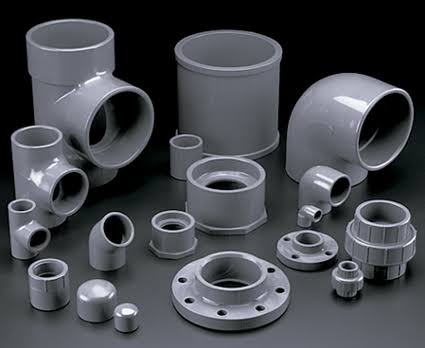
CPVC Fittings in Kenya
| Specification | Details |
|---|---|
| Product Name | CPVC Fittings |
| Material | Chlorinated Polyvinyl Chloride |
| Abbreviation | CPVC |
| Construction | Rigid thermoplastic |
| Available Sizes | Multiple diameters |
| Connection Types | Socket / Thread / Union / Flange |
| Common Types | Elbows, tees, sockets, reducers, unions, adaptors, caps |
| Pressure Rating | Product and temperature dependent |
| Temperature Range | Manufacturer dependent |
| Thread Options | Male / Female |
| Corrosion Resistance | Excellent |
| Chemical Resistance | Medium and temperature dependent |
| Internal Surface | Smooth |
| Application | Hot and cold water / compatible industrial fluids |
Description
CPVC Fittings in Kenya | Sanvil Industries Ltd
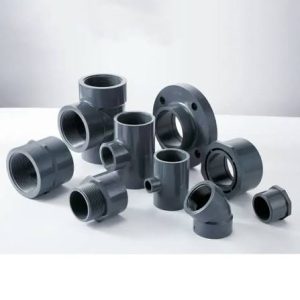
CPVC Fittings are rigid thermoplastic pipe connectors for hot and cold water systems, commercial plumbing, industrial process piping, water treatment, chemical handling, hotels, hospitals, factories, and institutional plumbing. Common options include elbows, tees, sockets, reducers, unions, male adaptors, female adaptors, bushes, end caps, and flange adaptors.
At Sanvil Industries Ltd, we stock quality CPVC Fittings in Kenya in multiple sizes and configurations for plumbing, commercial, and industrial projects. Our range supports suitable CPVC piping systems where higher operating temperatures call for a material with greater heat capability than conventional UPVC. We serve customers across Kenya, Uganda, and Tanzania at competitive wholesale and bulk prices.
Product Description – CPVC fittings
CPVC stands for Chlorinated Polyvinyl Chloride. It is a thermoplastic piping material that comes from PVC resin through an additional chlorination process. The resulting material offers greater temperature capability while retaining many advantages associated with corrosion-resistant plastic piping.
CPVC fittings connect pipe sections, change flow direction, create branches, reduce pipe diameter, terminate lines, and provide transitions between CPVC pipework and valves, pumps, tanks, heaters, and other compatible equipment.
One of the main advantages of CPVC is its suitability for many hot and cold water applications. However, actual temperature and pressure limits depend on the manufacturer, pipe schedule or class, fitting specification, and applicable piping standard.
Common joining systems include solvent-cement socket connections, threaded transitions, unions, and flange connections.
For reliable system selection, match the fitting to the pipe size, pressure requirement, operating temperature, fluid, connection method, and applicable standard.
Common Types of CPVC Fittings
| Fitting Type | Main Function |
|---|---|
| 90° Elbow | Changes pipe direction by 90° |
| 45° Elbow | Creates a gradual direction change |
| Equal Tee | Creates an equal-size branch |
| Reducing Tee | Creates a smaller branch |
| Straight Socket | Joins two compatible pipes |
| Reducer Socket | Connects different pipe diameters |
| Union | Allows convenient separation of pipe sections |
| Male Adaptor | Connects CPVC pipe to a compatible female thread |
| Female Adaptor | Connects CPVC pipe to a compatible male thread |
| Reducing Bush | Reduces a socket or connection size |
| End Cap | Closes a pipe end |
| Flange Adaptor | Provides a transition to a suitable flange system |
Common CPVC Fitting Sizes
CPVC fitting dimensions depend on the piping system and applicable standard. Common requirements can include:
| Nominal Size | Typical Application |
|---|---|
| 1/2″ | Domestic and commercial plumbing |
| 3/4″ | Hot and cold water distribution |
| 1″ | Commercial water systems |
| 1 1/4″ | Larger plumbing networks |
| 1 1/2″ | Commercial and industrial piping |
| 2″ | Main distribution lines |
| 2 1/2″ | Larger process systems |
| 3″ | Industrial and commercial piping |
| 4″ | Larger industrial systems |
Other sizes may form part of specific product ranges.
Always confirm the actual pipe outside diameter and dimensional standard because different CPVC piping systems may not have interchangeable dimensions.
Applications of CPVC fittings
1. Hot Water Systems
CPVC provides a practical piping option for hot-water distribution within suitable temperature and pressure limits.
2. Cold Water Supply
Commercial, residential, and institutional buildings can use CPVC components for suitable cold-water networks.
3. Hotels and Hospitality
Hotels can incorporate CPVC pipework into hot and cold water distribution for guest rooms, kitchens, laundries, and service areas.
4. Hospitals and Institutions
Suitable CPVC systems can serve water-distribution requirements in hospitals, schools, universities, offices, and other institutions.
5. Commercial Plumbing
Shopping centres, apartments, office buildings, restaurants, and other commercial properties can use CPVC piping for suitable plumbing applications.
6. Industrial Process Water
Factories can use CPVC pipework for compatible process-water and utility systems where temperature and pressure remain within product limits.
7. Water Treatment
Suitable fittings can form part of filtration, treatment, dosing, and process-water installations.
8. Chemical Processing
CPVC offers resistance to many chemicals. However, suitability depends on chemical type, concentration, temperature, and system materials.
9. Manufacturing Plants
Factories can incorporate CPVC into suitable utility and process piping networks.
10. Equipment Connections
Adaptors, unions, and flange options provide transitions between CPVC pipework and compatible tanks, valves, pumps, heaters, and equipment.
Key Features & Benefits of CPVC fittings
1. Good Heat Resistance
CPVC generally offers greater temperature capability than standard UPVC, making it suitable for many hot-water applications.
2. Excellent Corrosion Resistance
The material does not rust and performs well in many corrosive environments.
3. Good Chemical Resistance
CPVC resists many acids, alkalis, salts, and other compatible chemicals within suitable operating conditions.
4. Lightweight Construction
CPVC fittings offer convenient handling and installation compared with many metallic piping materials.
5. Smooth Internal Surface
The smooth bore supports efficient flow and helps minimize internal friction.
6. Wide Range of Configurations
Elbows, tees, reducers, sockets, unions, adaptors, bushes, and flange options support complete piping networks.
7. Hot and Cold Water Capability
A suitable CPVC system can handle both hot and cold water, reducing the need for different piping materials within some installations.
8. Competitive Pricing & Reliable Stock
Sanvil Industries Ltd offers competitive wholesale and bulk prices for contractors, plumbers, institutions, factories, and distributors.
CPVC vs UPVC Fittings
| Feature | CPVC | UPVC |
|---|---|---|
| Full Name | Chlorinated Polyvinyl Chloride | Unplasticized Polyvinyl Chloride |
| Structure | Rigid | Rigid |
| Hot Water Capability | Higher | More limited |
| Cold Water | Excellent | Excellent |
| Corrosion Resistance | Excellent | Excellent |
| Chemical Resistance | Excellent for many media | Excellent for many media |
| Commercial Plumbing | Common | Common |
| Industrial Piping | Common | Common |
| Solvent Socket Joining | Common | Common |
| Material Selection | Temperature and fluid dependent | Temperature and fluid dependent |
The main distinction is temperature capability. CPVC generally handles higher operating temperatures than UPVC.
CPVC vs PPR Fittings
| Feature | CPVC | PPR |
|---|---|---|
| Material | Chlorinated PVC | Polypropylene Random Copolymer |
| Hot Water | Suitable | Suitable |
| Cold Water | Suitable | Suitable |
| Joining Method | Solvent cement | Heat fusion |
| Corrosion Resistance | Excellent | Excellent |
| Internal Surface | Smooth | Smooth |
| Thread Adaptors | Available | Available |
| Commercial Plumbing | Common | Common |
| Installation Method | Socket / thread | Fusion / thread |
| Selection | Project dependent | Project dependent |
Both materials can serve hot and cold water systems when the correct product specification matches the operating conditions.
CPVC vs Stainless Steel Fittings
| Feature | CPVC | Stainless Steel |
|---|---|---|
| Weight | Light | Heavier |
| Corrosion Resistance | Excellent | Excellent, grade dependent |
| Hot Water | Good | Excellent |
| Very High Temperature | Limited | Better |
| Chemical Resistance | Medium dependent | Grade dependent |
| Electrical Conductivity | Non-conductive | Conductive |
| Installation | Relatively simple | System dependent |
| Cost | Often economical | Generally higher |
CPVC Solvent Socket Fittings
Solvent socket connections are common in CPVC piping.
The jointing system normally requires CPVC-compatible primer where applicable and CPVC solvent cement according to the manufacturer’s requirements.
Common socket fittings include:
CPVC Elbows
Change pipeline direction.
CPVC Tees
Create branch connections.
CPVC Sockets
Connect straight pipe sections.
CPVC Reducers
Create transitions between different pipe sizes.
CPVC Unions
Provide convenient separation points for maintenance.
CPVC End Caps
Close pipe ends.
Never assume that every PVC solvent cement suits CPVC. Use a product that specifically matches the pipe and fitting manufacturer’s requirements.
CPVC Threaded Fittings
Threaded transition fittings connect CPVC pipework to valves, pumps, heaters, gauges, and other compatible equipment.
Common options include:
- Male adaptors
- Female adaptors
- Threaded elbows
- Threaded tees
- Threaded unions
- Reducing bushes
For threaded connections, confirm whether the system requires BSPP, BSPT, NPT, or another thread standard.
Avoid excessive tightening because excessive mechanical force can damage thermoplastic threads or fitting bodies.
CPVC Fittings for Chemical Systems
CPVC offers useful chemical resistance across many industrial applications. However, chemical compatibility requires evaluation of the complete piping system.
Before selection, confirm:
- Chemical name
- Concentration
- Operating temperature
- Pressure
- CPVC compatibility
- Solvent cement compatibility
- Seal material
- Gasket material
- Valve material
- Process conditions
Higher temperatures can change chemical resistance and pressure capability, so temperature must form part of material selection.
Understanding Temperature and Pressure
CPVC pipe and fittings have pressure capabilities that vary with operating temperature.
As temperature rises, the allowable working pressure can decrease. Therefore, a pressure rating at room temperature should not automatically represent the allowable pressure at a higher service temperature.
For hot-water or industrial applications, confirm:
Maximum operating temperature + system pressure + pressure surge + fitting class + pipe specification + manufacturer data.
This approach helps ensure the complete piping system matches the application.
Technical Data Sheet (TDS)
| Parameter | Typical Information |
|---|---|
| Product | CPVC Pipe Fittings |
| Material | Chlorinated Polyvinyl Chloride |
| Construction | Rigid thermoplastic |
| Sizes | Multiple |
| Connection | Socket / Thread / Union / Flange |
| Pressure Rating | Product and temperature dependent |
| Temperature Range | Manufacturer dependent |
| Joint Method | CPVC solvent cement / mechanical connection |
| Thread Options | Male / Female |
| Corrosion Resistance | Excellent |
| Chemical Resistance | Medium dependent |
| Internal Surface | Smooth |
| Application | Hot water / cold water / compatible industrial fluids |
Choosing the Correct CPVC Fitting
Confirm the Pipe Size
Match the fitting to the correct pipe diameter and dimensional system.
Identify the Fitting Type
Choose an elbow, tee, socket, reducer, union, adaptor, bush, cap, or flange option according to the piping layout.
Check Operating Temperature
Temperature is especially important in CPVC systems. Confirm the maximum and normal operating temperatures.
Check System Pressure
Select fittings that match the system pressure at the actual operating temperature.
Confirm the Connection Method
Determine whether the installation requires solvent socket, thread, union, flange, or another connection.
Check the Thread Standard
For threaded adaptors, confirm BSPP, BSPT, NPT, or the applicable equipment thread.
Check Fluid Compatibility
For chemicals and industrial fluids, confirm compatibility with CPVC, solvent cement, seals, gaskets, and valves.
CPVC Pipes, Valves & Accessories
Sanvil Industries Ltd can also support customers with compatible piping components depending on stock and project requirements.
CPVC Pipes
Multiple sizes for hot water, cold water, commercial plumbing, and suitable industrial systems.
CPVC Ball Valves
Provide isolation and manual flow control in compatible systems.
CPVC Unions
Allow convenient separation of pipe sections and equipment connections.
Flange Adaptors
Connect CPVC pipework to compatible pumps, valves, meters, tanks, and industrial equipment.
Threaded Adaptors
Provide transitions between CPVC piping and compatible threaded components.
CPVC Solvent Cement
Suitable cement creates socket joints according to the manufacturer’s installation requirements.
Why Choose Sanvil Industries Ltd
Wide Range of CPVC Fittings
Our range can include elbows, tees, sockets, reducers, unions, adaptors, bushes, caps, and flange connections.
Multiple Sizes
We stock various sizes for plumbing, hot-water, commercial, institutional, and industrial requirements.
Hot and Cold Water Solutions
CPVC offers a practical solution for projects that require both hot and cold water distribution.
Pipes and Accessories
Customers can source CPVC pipes alongside fittings, valves, adaptors, and other compatible accessories.
Competitive Wholesale Pricing
We offer competitive prices for plumbers, contractors, hotels, hospitals, institutions, factories, and distributors.
Technical Selection Support
Customers can provide the pipe size, fitting type, operating temperature, pressure, connection method, medium, and quantity for an accurate quotation.
Regional Distribution
We serve customers throughout Kenya, Uganda, Tanzania, and other East African markets.
Bulk Order Support
Sanvil Industries Ltd handles bulk requirements for commercial buildings, contractors, factories, institutions, plumbing projects, and distributors.
Safety & Installation
Select CPVC fittings according to the pipe size, operating temperature, pressure, fluid, connection type, and applicable piping standard.
Use only solvent cement and primer, where applicable, that match the CPVC system requirements.
Follow the manufacturer’s instructions for pipe preparation, cement application, assembly, and cure time.
Allow the joint enough cure time before pressure enters the system.
Avoid excessive force on threaded CPVC components.
Provide adequate pipe support, particularly near valves, pumps, heaters, and heavy equipment.
Keep CPVC away from incompatible chemicals, sealants, lubricants, and other substances that can affect the material.
Do not use standard CPVC pipework for steam, compressed gases, or temperatures beyond the manufacturer’s limits.
FAQs
Q1. What types of CPVC fittings do you stock?
A: Our range can include elbows, tees, sockets, reducers, unions, male adaptors, female adaptors, bushes, caps, and flange options.
Q2. Which CPVC fitting sizes do you have?
A: We stock multiple sizes for hot water, cold water, commercial plumbing, and industrial projects. Customers can provide the pipe size, fitting type, and quantity for a quotation.
Q3. Can CPVC fittings work with hot water?
A: Yes. CPVC offers higher temperature capability than standard UPVC and suits many hot-water systems within the product’s temperature and pressure limits.
Q4. What is the difference between CPVC and UPVC?
A: CPVC contains more chlorine within its polymer structure and generally offers greater temperature capability. UPVC mainly suits cold-water and other compatible piping applications.
Q5. What is the difference between CPVC and PPR?
A: CPVC commonly uses solvent socket joints, while PPR normally uses heat fusion. Both materials can serve suitable hot and cold water systems.
Q6. Do you have threaded CPVC fittings?
A: Yes. Our range can include male adaptors, female adaptors, threaded unions, bushes, and other transition fittings.
Q7. Can CPVC fittings handle chemicals?
A: CPVC resists many chemicals, but suitability depends on the chemical, concentration, temperature, pressure, seals, joint materials, and other system components.
Q8. Do you stock CPVC pipes as well as fittings?
A: Yes. Our range can include CPVC pipes together with compatible fittings, valves, unions, adaptors, and other piping accessories.
Q9. Can I buy CPVC fittings in bulk?
A: Yes. Sanvil Industries Ltd handles bulk orders for contractors, plumbers, hotels, hospitals, factories, institutions, and distributors.
Q10. Which countries can Sanvil Industries Ltd deliver CPVC fittings to?
A: We serve customers across Kenya, Uganda, Tanzania, and other East African markets.
Contact Us
For quotations or bulk orders in Kenya, Uganda, and Tanzania, contact Sanvil Industries Ltd for competitive prices and fast delivery.
Sanvil Industries Ltd
📍 Location: Industrial Area, Nairobi, Kenya
📞 Phone: +254 722343016
📧 Email: sanvilindustries@gmail.com
Reviews
There are no reviews yet.