
Pneumatic Fittings in Kenya
| Specification | Details |
|---|---|
| Product Name | Pneumatic Fittings |
| Product Type | Compressed-Air Tube Connectors |
| Common Design | Push-In / Push-to-Connect |
| Body Material | Engineering plastic / brass / stainless steel, product dependent |
| Common Tube Sizes | 4, 6, 8, 10, 12, 14 & 16 mm |
| Thread Sizes | Multiple options |
| Thread Types | BSPP / BSPT / NPT, product dependent |
| Tube Compatibility | PU / Nylon / other compatible pneumatic tube |
| Medium | Compressed air / compatible gases or fluids |
| Working Pressure | Product dependent |
| Temperature Range | Product dependent |
| Seal Material | Product dependent |
| Connection | Tube-to-thread / tube-to-tube |
| Application | Pneumatics and industrial automation |
Description
Pneumatic Fittings in Kenya | Sanvil Industries Ltd
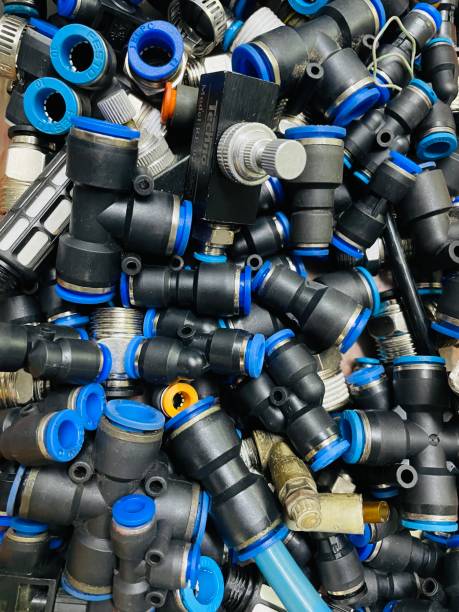
Pneumatic Fittings are compact connectors that join air tubes, hoses, pneumatic cylinders, solenoid valves, air preparation units, compressors, manifolds, and automation equipment within compressed-air systems. Common options include push-in fittings, straight connectors, elbows, tees, Y-connectors, unions, reducers, bulkhead fittings, flow-control fittings, silencers, and threaded adaptors.
At Sanvil Industries Ltd, we stock quality Pneumatic Fittings in Kenya for industrial automation, manufacturing, workshops, packaging machinery, pneumatic tools, and compressed-air installations. Our range covers multiple tube sizes and thread configurations for use with PU, nylon, and other compatible pneumatic tubing. We serve customers across Kenya, Uganda, and Tanzania at competitive wholesale and bulk prices.
Product Description – Pneumatic Fittings
Pneumatic fittings provide secure connections between tubes and components in compressed-air systems. Their compact construction makes them suitable for machinery, control panels, production lines, cylinders, valves, and automation equipment where quick installation and convenient maintenance are important.
Push-in pneumatic fittings, also known as push-to-connect fittings, are among the most common options. The installer inserts a compatible tube into the fitting, where an internal gripping mechanism and seal create the connection.
To remove the tube, the system must first have no air pressure. The operator can then press the release collar while pulling the tube from the fitting.
Common fitting body materials include engineering plastic, nickel-plated brass, brass, and stainless steel, depending on the product range.
For threaded pneumatic fittings, always confirm the thread type. BSPP, BSPT, and NPT are different thread systems and should not automatically substitute for one another.
Common Types of Pneumatic Fittings
| Fitting Type | Main Function |
|---|---|
| Straight Male Connector | Connects pneumatic tube to a female threaded port |
| Straight Female Connector | Connects tube to a male threaded component |
| Union Straight | Connects two tubes |
| Reducer Union | Connects tubes of different diameters |
| Male Elbow | Connects tube to a threaded port at 90° |
| Union Elbow | Connects two tubes at 90° |
| Male Tee | Creates a branch from a threaded port |
| Union Tee | Creates a three-way tube connection |
| Y Connector | Divides one air line into two branches |
| Bulkhead Union | Passes tubing through a panel or enclosure |
| Flow Control Fitting | Adjusts airflow in suitable pneumatic circuits |
| Silencer / Muffler | Helps reduce exhaust noise |
| Plug | Closes an unused pneumatic connection |
| Manifold Connector | Supports multiple air-line connections |
Common Pneumatic Tube Sizes
Pneumatic fittings normally match the outside diameter (OD) of the tube.
| Tube OD | Common Application |
|---|---|
| 4 mm | Instrumentation and compact equipment |
| 6 mm | Small cylinders and automation |
| 8 mm | General industrial pneumatics |
| 10 mm | Machinery and higher airflow |
| 12 mm | Industrial air distribution |
| 14 mm | Larger pneumatic equipment |
| 16 mm | Higher-flow pneumatic systems |
For example, an 8 mm × 1/4″ pneumatic fitting normally refers to an 8 mm tube connection and a 1/4″ threaded connection. However, the 1/4″ thread can follow BSP, BSPT, NPT, or another standard, so thread confirmation remains important.
Applications of Pneumatic Fittings
1. Industrial Automation
Pneumatic connectors create compact air-line connections in automated production machinery and control systems.
2. Pneumatic Cylinders
Fittings connect air tubes to cylinders that provide linear motion in industrial machinery.
3. Solenoid Valves
Suitable connectors link pneumatic tubing to solenoid valves for automated airflow control.
4. Packaging Machinery
Packaging lines use pneumatic systems for gripping, pushing, clamping, sealing, sorting, and other mechanical functions.
5. Manufacturing Equipment
Factories use pneumatic connectors throughout assembly machines, processing equipment, and production lines.
6. Air Compressors
Suitable fittings connect compressed-air components, regulators, manifolds, and distribution tubing.
7. Pneumatic Tools
Air systems use connectors and couplings to distribute compressed air to compatible workshop and industrial tools.
8. Robotics
Pneumatic circuits can control grippers, actuators, clamps, and other functions within robotic systems.
9. Control Panels
Compact push-in fittings help organize air connections inside pneumatic control cabinets and machine panels.
10. Food and Packaging Plants
Suitable fitting materials can form part of pneumatic machinery in food production and packaging environments where the application permits.
Key Features & Benefits of Pneumatic Fittings
1. Quick Tube Connection
Push-in designs allow fast tube insertion without complex assembly procedures.
2. Compact Construction
Small fitting dimensions make installation easier inside machines, control panels, and confined spaces.
3. Multiple Tube Sizes
Options for 4 mm through 16 mm tubing support many industrial pneumatic applications.
4. Wide Range of Configurations
Straight connectors, elbows, tees, unions, reducers, Y-connectors, and flow-control fittings provide flexible circuit design.
5. Easy Maintenance
Push-to-connect designs simplify tube replacement and pneumatic-system maintenance.
6. Reliable Air Connection
The internal gripping and sealing mechanism helps maintain a secure connection when the fitting and tube match correctly.
7. PU Tube Compatibility
Many pneumatic fittings pair with polyurethane tubing commonly found in industrial compressed-air systems.
8. Competitive Pricing & Reliable Stock
Sanvil Industries Ltd offers competitive wholesale and bulk prices for factories, contractors, machine builders, workshops, and distributors.
Push-In Pneumatic Fittings
Push-in fittings offer one of the simplest ways to connect pneumatic tubing.
A typical fitting contains:
Release Collar
The collar allows tube removal after the system has no pressure.
Tube Gripping Mechanism
The internal gripping component holds the tube inside the fitting.
Internal Seal
A suitable seal helps prevent air leakage around the tube.
Fitting Body
The body provides structural support and can incorporate a threaded connection.
Threaded Base
Male or female thread options allow connection to cylinders, valves, manifolds, regulators, and other pneumatic components.
Pneumatic Fittings and PU Tubing
PU tubing works with many push-in pneumatic fittings because it combines flexibility, good abrasion resistance, and convenient routing through machinery.
For a proper connection, the tube outside diameter must match the fitting size.
For example:
| Fitting Size | Tube Requirement |
|---|---|
| 4 mm | 4 mm OD tube |
| 6 mm | 6 mm OD tube |
| 8 mm | 8 mm OD tube |
| 10 mm | 10 mm OD tube |
| 12 mm | 12 mm OD tube |
| 14 mm | 14 mm OD tube |
| 16 mm | 16 mm OD tube |
Always check tube material, wall thickness, hardness, pressure rating, and fitting compatibility.
Pneumatic Fittings vs Hydraulic Fittings
| Feature | Pneumatic Fittings | Hydraulic Fittings |
|---|---|---|
| Main Medium | Compressed air | Hydraulic fluid |
| Typical Pressure | Lower | Much higher |
| Push-In Designs | Very common | Application dependent |
| Tube Material | PU, nylon and others | Hydraulic tube/hose |
| Weight | Generally light | Generally heavier |
| Main Application | Automation and air systems | Hydraulic power systems |
| Interchangeability | No | No |
A pneumatic fitting should not substitute for a hydraulic fitting unless the manufacturer specifically rates the component for that service.
Flow Control Pneumatic Fittings
Flow-control fittings regulate airflow within suitable pneumatic circuits. They commonly help control the operating speed of pneumatic cylinders and actuators.
Common configurations include meter-in and meter-out control, depending on the fitting and circuit design.
Users should select flow-control components according to tube size, thread size, airflow requirements, working pressure, and pneumatic circuit design.
Pneumatic Silencers
Pneumatic silencers, also known as mufflers, connect to exhaust ports on valves, cylinders, and other pneumatic equipment.
They help reduce the noise that occurs when compressed air exits into the atmosphere.
Common materials include sintered bronze, plastic, and stainless steel, depending on the application.
Technical Data Sheet (TDS)
| Parameter | Typical Information |
|---|---|
| Product | Pneumatic Fittings |
| Connection Type | Push-In / Thread |
| Tube Sizes | 4–16 mm, product dependent |
| Thread Sizes | Multiple |
| Thread Standard | BSPP / BSPT / NPT, product dependent |
| Body Material | Plastic / Brass / Stainless Steel |
| Compatible Tubing | PU / Nylon / suitable pneumatic tube |
| Working Medium | Compressed air / compatible media |
| Working Pressure | Manufacturer dependent |
| Temperature Range | Manufacturer dependent |
| Seal Material | Product dependent |
| Configuration | Straight / Elbow / Tee / Union / Y / Reducer |
| Application | Pneumatic automation |
Choosing the Correct Pneumatic Fitting
Confirm the Tube Outside Diameter
Push-in fitting sizes normally correspond to the tube OD. Confirm whether the tube is 4, 6, 8, 10, 12, 14, or 16 mm.
Identify the Fitting Configuration
Determine whether the system requires a straight connector, elbow, tee, union, reducer, Y-connector, bulkhead, or flow-control fitting.
Check the Thread Size
Confirm whether the equipment port requires 1/8″, 1/4″, 3/8″, 1/2″, or another thread size.
Confirm the Thread Standard
Check BSPP, BSPT, NPT, or another applicable standard rather than selecting by nominal size alone.
Check Working Pressure
The fitting and tubing must meet the pneumatic system’s maximum operating pressure.
Consider Operating Temperature
Temperature affects tube, seal, and fitting performance. Check the manufacturer’s limits for the exact product.
Check Media Compatibility
Standard pneumatic fittings primarily suit compressed air. For water, chemicals, gases, vacuum, oil, or other media, confirm compatibility first.
Why Choose Sanvil Industries Ltd
Wide Range of Pneumatic Fittings
Our range can include straight connectors, elbows, tees, unions, reducers, Y-connectors, bulkhead fittings, flow controls, and silencers.
Multiple Tube Sizes
We stock options for common pneumatic tube diameters from 4 mm through 16 mm, subject to availability.
PU Tubing Available
Customers can source pneumatic fittings together with compatible PU tubing and other pneumatic accessories.
Multiple Thread Options
Different thread sizes and configurations support cylinders, solenoid valves, regulators, manifolds, and machinery.
Competitive Wholesale Pricing
We offer competitive prices for factories, workshops, machine builders, contractors, institutions, and distributors.
Technical Selection Support
Customers can provide the tube OD, thread size, thread type, fitting configuration, pressure, and quantity for a more accurate quotation.
Regional Distribution
We serve customers throughout Kenya, Uganda, Tanzania, and other East African markets.
Bulk Order Support
Sanvil Industries Ltd handles bulk requirements for factories, automation projects, machinery manufacturers, contractors, and distributors.
Safety & Installation
Always isolate the compressed-air supply and release system pressure before installation, removal, or maintenance.
Cut pneumatic tubing squarely with a suitable tube cutter. A clean, straight tube end helps the internal seal form a reliable connection.
Push the tube fully into the fitting and check the connection before applying normal operating pressure.
Avoid excessive tube bending immediately next to the fitting because this can place unnecessary stress on the connection.
Check fittings, tubes, and connections periodically for leaks, cracks, abrasion, or other signs of deterioration.
Do not assume a standard compressed-air fitting can handle steam, high-temperature fluids, aggressive chemicals, fuel gases, oxygen, hydraulic oil, or other specialized media. Confirm the exact manufacturer’s rating before any non-standard application.
FAQs
Q1. What types of pneumatic fittings do you stock?
A: Our range can include straight connectors, elbows, tees, unions, reducers, Y-connectors, bulkhead fittings, flow controls, silencers, and other pneumatic accessories.
Q2. Which pneumatic fitting sizes do you have?
A: Common tube options include 4, 6, 8, 10, 12, 14, and 16 mm. Availability depends on fitting type, thread size, and current stock.
Q3. What does 8 mm × 1/4″ mean on a pneumatic fitting?
A: It normally means the fitting accepts an 8 mm OD tube and has a 1/4″ thread. Always confirm whether the thread follows BSPP, BSPT, NPT, or another standard.
Q4. Can pneumatic fittings work with PU tubing?
A: Yes. Many push-in fittings pair with PU tubing when the tube diameter, hardness, pressure range, and fitting specification match.
Q5. What is a push-in pneumatic fitting?
A: It is a connector that grips and seals a compatible pneumatic tube after insertion, which allows quick assembly in compressed-air systems.
Q6. Which thread type should I choose?
A: Check the thread on your cylinder, valve, regulator, manifold, or equipment port. Common options include BSPP, BSPT, and NPT.
Q7. Can pneumatic fittings work with water?
A: Some fitting ranges can handle water and other compatible media. Check the body material, seal, tube, pressure, temperature, and manufacturer specification first.
Q8. Do you stock PU pipes for pneumatic fittings?
A: Yes. Our range includes PU tubing in multiple outside diameters for suitable pneumatic and compressed-air applications.
Q9. Can I buy pneumatic fittings in bulk?
A: Yes. Sanvil Industries Ltd handles bulk orders for factories, machine builders, workshops, automation projects, contractors, and distributors.
Q10. Which countries can Sanvil Industries Ltd deliver pneumatic fittings to?
A: We serve customers across Kenya, Uganda, Tanzania, and other East African markets.
Contact Us
For quotations or bulk orders in Kenya, Uganda, and Tanzania, contact Sanvil Industries Ltd for competitive prices and fast delivery.
Sanvil Industries Ltd
📍 Location: Industrial Area, Nairobi, Kenya
📞 Phone: +254 722343016
📧 Email: sanvilindustries@gmail.com

Reviews
There are no reviews yet.