
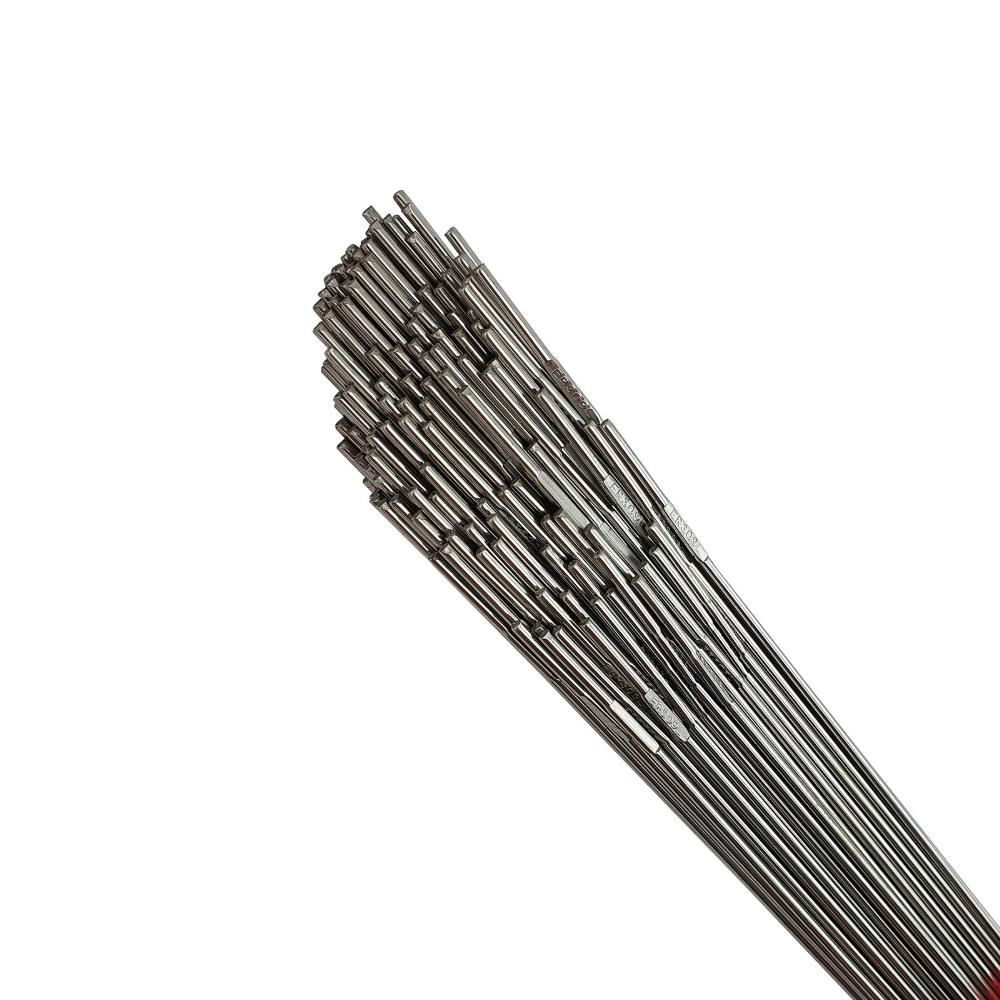
SS Welding Rods in Kenya
| Specification | Details |
|---|---|
| Product Name | SS Welding Rod |
| Full Name | Stainless Steel Welding Electrode |
| Common Classifications | E308L-16 / E309L-16 / E316L-16 |
| Welding Process | SMAW / Stick Welding |
| Core Material | Stainless alloy |
| Coating | Flux coating |
| Common Diameters | 2.0 / 2.5 / 3.2 / 4.0 / 5.0 mm, product dependent |
| Length | Manufacturer dependent |
| Polarity | Electrode-classification dependent |
| Current Range | Diameter and manufacturer dependent |
| Packaging | Manufacturer dependent |
| Application | Stainless fabrication and repair |
| Storage | Clean, dry conditions |
Description
SS Welding Rods in Kenya | Sanvil Industries Ltd
SS Welding Rods, also known as Stainless Steel Welding Electrodes, are welding consumables for joining and repairing stainless steel components. Common grades such as E308L-16, E309L-16, and E316L-16 serve different stainless-steel and dissimilar-metal applications across fabrication, food-processing equipment, tanks, piping, machinery, water-treatment plants, construction, and industrial maintenance.
At Sanvil Industries Ltd, we stock quality SS Welding Rods in Kenya in different electrode classifications and diameters for professional stainless-steel fabrication and repair. We serve welders, fabricators, contractors, workshops, factories, and engineering companies across Kenya, Uganda, and Tanzania at competitive wholesale and bulk prices.
Product Description – SS Welding Rods
Stainless steel welding electrodes provide filler metal and, for stick welding electrodes, flux protection during the welding process.
In SMAW (Shielded Metal Arc Welding), commonly called stick welding, an electric arc forms between the electrode and workpiece. The electrode core melts into the weld pool while its flux coating produces shielding gases and slag that help protect the molten metal.
A simplified process is:
Power Source → Electrode Holder → SS Electrode → Arc → Weld Pool → Stainless Joint
Selecting the correct electrode is important because stainless steels have different compositions and corrosion-resistance requirements.
The electrode should match the base material, service environment, joint design, welding process, and applicable fabrication specification.
Common SS Welding Rods Grades
E308L-16 Welding Rods
E308L-16 is a common stainless electrode for welding many 18Cr-8Ni austenitic stainless steels, including applications involving common 304-series materials.
Typical applications include:
- Stainless tanks
- Food equipment
- Kitchen equipment
- Stainless pipework
- Fabricated frames
- Machinery
- General SS304 fabrication
The “L” indicates a low-carbon weld-metal classification, which helps control carbide precipitation and supports corrosion performance in suitable applications.
E309L-16 Welding Rods
E309L-16 contains higher alloy content and commonly serves dissimilar-metal joints, particularly suitable combinations of stainless steel and carbon/mild steel.
Applications can include:
- Stainless-to-mild-steel joints
- Transition joints
- Repair work
- Fabrication
- Buffer layers
- Industrial maintenance
Always verify the complete joint specification because dissimilar-metal welding can involve service-temperature, dilution, corrosion, and mechanical considerations.
E316L-16 Welding Rods
E316L-16 commonly serves suitable 316 and 316L stainless steel fabrication.
The weld metal contains molybdenum, which supports improved corrosion resistance in many demanding environments.
Typical applications include:
- Chemical equipment
- Food-processing equipment
- Water-treatment plants
- Stainless tanks
- Process piping
- Pharmaceutical equipment
- Marine-related fabrication
Chemical compatibility still depends on the complete material system and service environment.
E308L vs E309L vs E316L
| Electrode | Common Application | Typical Base-Material Association |
|---|---|---|
| E308L-16 | General stainless fabrication | 304 / 304L |
| E309L-16 | Dissimilar-metal joints | Stainless to carbon/mild steel |
| E316L-16 | Higher corrosion-resistance applications | 316 / 316L |
This table provides general guidance only. Welding procedure specifications and engineering requirements take priority for critical work.
Common Electrode Diameters
| Diameter | Typical General Application |
|---|---|
| 2.0 mm | Thin and light fabrication |
| 2.5 mm | Light stainless fabrication |
| 3.2 mm | General industrial welding |
| 4.0 mm | Heavier fabrication |
| 5.0 mm | Heavy sections, equipment dependent |
Electrode diameter selection depends on:
- Material thickness
- Joint design
- Welding position
- Power source
- Electrode classification
- Heat input requirements
- Fabrication procedure
Applications of SS Welding Rods
1. Stainless Steel Fabrication
SS electrodes join stainless sheets, plates, pipes, frames, brackets, tanks, and fabricated components.
2. Food-Processing Equipment
Suitable grades serve stainless tanks, machinery, frames, pipework, tables, and production equipment.
3. Stainless Steel Tanks
Fabricators use appropriate electrodes for tanks and vessels where the base material and welding specification permit SMAW.
4. Industrial Pipework
Suitable stainless electrodes join compatible pipes, fittings, flanges, and process components.
5. Water-Treatment Plants
Stainless fabrication in water-treatment facilities can call for corrosion-resistant welding consumables.
6. Chemical Processing
Suitable electrode grades support compatible stainless equipment, pipework, tanks, and fabricated structures.
7. Machinery
Factories and workshops use stainless electrodes for machine frames, guards, supports, repairs, and components.
8. Construction
Stainless welding consumables serve suitable architectural, structural, and building-service fabrication.
9. Dissimilar-Metal Fabrication
Suitable grades such as E309L can join certain stainless-steel components to carbon or mild steel.
10. Industrial Maintenance
Maintenance teams use stainless electrodes for repairs and modifications on compatible stainless equipment.
Key Features & Benefits of SS Welding Rods
1. Strong Stainless Joints
Correct electrode selection provides dependable weld-metal properties for suitable stainless-steel fabrication.
2. Corrosion-Resistant Options
Different alloy classifications support various corrosion-resistance requirements.
3. Multiple Electrode Grades
E308L, E309L, E316L, and other classifications provide options for different base materials.
4. Multiple Diameters
Different electrode sizes support light sheet work through heavier industrial fabrication.
5. Repair & Fabrication Capability
Stainless electrodes serve both new fabrication and suitable maintenance work.
6. Dissimilar-Metal Options
Appropriate electrodes can support stainless-to-carbon-steel transition joints.
7. Broad Industrial Application
These consumables serve food, chemical, water, construction, fabrication, and general industrial sectors.
8. Competitive Pricing & Reliable Stock
Sanvil Industries Ltd provides competitive wholesale and bulk prices for workshops, contractors, factories, fabricators, and distributors.
SS304 Welding Rod Selection
For many common SS304 and SS304L fabrication applications, E308L-series electrodes are a common choice.
However, selection should also consider:
- Exact base-metal grade
- Joint type
- Service temperature
- Corrosion environment
- Welding position
- Applicable welding code
- Engineering requirements
For critical fabrication, follow the approved Welding Procedure Specification (WPS).
SS316 Welding Rod Selection
For many SS316 and SS316L applications, E316L-series electrodes are common.
The molybdenum content in this filler family supports corrosion performance suitable for many applications involving 316-series stainless steel.
This can make it useful in:
- Food-processing plants
- Chemical plants
- Water-treatment systems
- Process piping
- Pharmaceutical equipment
- Coastal installations
The service medium and operating conditions still require consideration.
Stainless Steel to Mild Steel Welding
Joining stainless steel to mild/carbon steel requires attention to differences in chemical composition and thermal characteristics.
E309L-type filler metal is common for many suitable dissimilar joints because its higher alloy content helps accommodate dilution from carbon steel.
For engineered joints, confirm:
- Stainless grade
- Carbon-steel grade
- Material thickness
- Joint geometry
- Service temperature
- Corrosion conditions
- Mechanical load
- Welding procedure
Understanding the Electrode Code
Take:
E308L-16
as an example.
E identifies an electrode classification.
308 identifies the stainless weld-metal family.
L indicates low carbon.
The final classification digits relate to characteristics such as coating, welding position, and current/polarity suitability under the applicable standard.
The manufacturer’s datasheet should guide actual welding parameters.
SS Welding Rods vs TIG Rods
The term “welding rod” can refer to different products, so the welding process should always be specified.
| Feature | Stick/SMAW Electrode | TIG Filler Rod |
|---|---|---|
| Flux Coating | Yes | No |
| Process | SMAW | GTAW/TIG |
| Electrode Role | Melts into joint | Separate filler |
| Shielding | Flux provides protection | External shielding gas |
| Common SS Grades | E308L / E309L / E316L | ER308L / ER309L / ER316L |
| Industrial Fabrication | Yes | Yes |
For example:
E316L-16 generally refers to a coated SMAW electrode.
ER316L generally refers to bare filler wire/rod for processes such as TIG, subject to specification.
Welding Position
Electrode classification influences suitable welding positions.
Depending on the exact product, applications can include:
- Flat
- Horizontal
- Vertical
- Overhead
Check the electrode classification and manufacturer recommendations before welding.
Current and Polarity
Stainless electrodes can have specific requirements for:
- AC
- DC
- DC electrode positive
- Current range
These requirements depend on electrode classification, diameter, and manufacturer.
Do not select amperage from diameter alone. Follow the electrode manufacturer’s recommended range and the applicable welding procedure.
Stainless Steel Contamination Control
Stainless steel can suffer surface contamination when tools that previously contact carbon steel transfer iron particles onto it.
Good fabrication practice can include separate:
- Stainless wire brushes
- Grinding discs
- Cutting tools
- Work surfaces
- Handling equipment where necessary
Contamination control helps preserve the corrosion performance and appearance of stainless fabrication.
Electrode Storage
Stainless welding electrodes should remain:
- Dry
- Clean
- Protected from moisture
- In suitable packaging
- Away from contamination
Moisture can affect electrode performance and weld quality.
Storage and any conditioning procedure should follow the manufacturer’s recommendations for the exact electrode.
Technical Data Sheet (TDS)
| Parameter | Typical Information |
|---|---|
| Product | Stainless Steel Welding Electrode |
| Common Grades | E308L-16 / E309L-16 / E316L-16 |
| Process | SMAW |
| Electrode Type | Flux-coated stainless electrode |
| Diameter | Multiple options |
| Length | Manufacturer dependent |
| Current | Product and diameter dependent |
| Polarity | Classification dependent |
| Welding Position | Classification dependent |
| Base Material | Stainless / suitable dissimilar metals |
| Packaging | Manufacturer dependent |
| Storage | Dry conditions |
| Application | Fabrication / Maintenance / Repair |
How to Choose the Correct SS Welding Rod
Identify the Stainless Grade
Determine whether the base material is SS304, SS316, or another stainless grade.
Check for Dissimilar Metals
If the joint combines stainless and carbon steel, select a filler that suits both materials and the service conditions.
Select the Electrode Diameter
Match diameter to material thickness, joint design, welding position, and power source.
Confirm the Welding Process
Determine whether the application requires SMAW electrodes, TIG filler rods, MIG wire, or another consumable.
Check the Service Environment
Consider moisture, chemicals, chlorides, temperature, food contact, and other process conditions.
Confirm the Welding Position
Select an electrode classification that supports the required position.
Follow the WPS
For critical industrial work, use the approved welding procedure and applicable standard.
Request Certification
Where project specifications apply, confirm electrode classification and manufacturer documentation.
Why Choose Sanvil Industries Ltd
Multiple Stainless Electrode Grades
Our range can include E308L, E309L, E316L, and other stainless welding consumables according to availability.
Multiple Diameters
Different sizes support light fabrication, pipework, machinery, and heavier industrial work.
SS304 & SS316 Solutions
Customers can select suitable consumables for common 304-series and 316-series stainless applications.
Dissimilar-Metal Options
Suitable electrode grades support certain stainless-to-mild-steel fabrication requirements.
Competitive Wholesale Pricing
We offer competitive prices for welders, workshops, fabricators, factories, contractors, and distributors.
Technical Selection Support
For faster quotation, provide the base-metal grade, electrode classification, diameter, quantity, and welding process.
Regional Distribution
We serve customers throughout Kenya, Uganda, Tanzania, and other East African markets.
Bulk Order Support
Sanvil Industries Ltd handles bulk requirements for engineering companies, fabrication workshops, factories, contractors, institutions, and distributors.
Safety & Handling
Welding produces intense light, UV/IR radiation, heat, sparks, fumes, and electrical hazards.
Use appropriate welding PPE, including a suitable welding helmet, gloves, protective clothing, and footwear.
Provide adequate ventilation and fume control, especially when welding stainless steel because welding fumes can contain hazardous metals, including chromium and nickel compounds.
Keep flammable materials away from the welding area.
Inspect welding leads, electrode holders, earth connections, and power equipment before work.
For tanks, pipes, confined spaces, pressure equipment, food-processing systems, structural work, and other critical fabrication, follow applicable welding procedures and safety requirements.
FAQs
Q1. What are SS welding rods?
A: They are stainless steel welding consumables for joining or repairing compatible stainless components.
Q2. Which rod suits SS304?
A: E308L-series electrodes are common for many SS304 and SS304L applications. Confirm the exact base metal and fabrication specification.
Q3. Which rod suits SS316?
A: E316L-series electrodes are common for many SS316 and SS316L applications.
Q4. Which rod can join stainless steel to mild steel?
A: E309L-series filler metal is common for many suitable stainless-to-carbon-steel joints, subject to the service and engineering requirements.
Q5. What diameters do you stock?
A: Our range can include 2.5 mm, 3.2 mm, 4.0 mm, and other diameters according to grade and stock.
Q6. What is the difference between E308L and E316L?
A: They have different alloy compositions. E308L commonly suits many 304-series applications, while E316L commonly suits many 316-series applications.
Q7. Are TIG rods the same as stick electrodes?
A: No. TIG normally uses bare filler such as ER308L or ER316L, while stick welding uses flux-coated electrodes such as E308L-16 or E316L-16.
Q8. Do you have E309L welding rods?
A: Our range can include E309L options for suitable dissimilar-metal and industrial fabrication applications.
Q9. Can I buy stainless welding rods in bulk?
A: Yes. Sanvil Industries Ltd handles bulk orders for welders, factories, fabricators, contractors, engineering companies, and distributors.
Q10. Which countries can Sanvil Industries Ltd deliver SS welding rods to?
A: We serve customers across Kenya, Uganda, Tanzania, and other East African markets.
Contact Us
For quotations or bulk orders in Kenya, Uganda, and Tanzania, contact Sanvil Industries Ltd for competitive prices and fast delivery.
Sanvil Industries Ltd
📍 Location: Industrial Area, Nairobi, Kenya
📞 Phone: +254 722343016
📧 Email: sanvilindustries@gmail.com
Reviews
There are no reviews yet.