
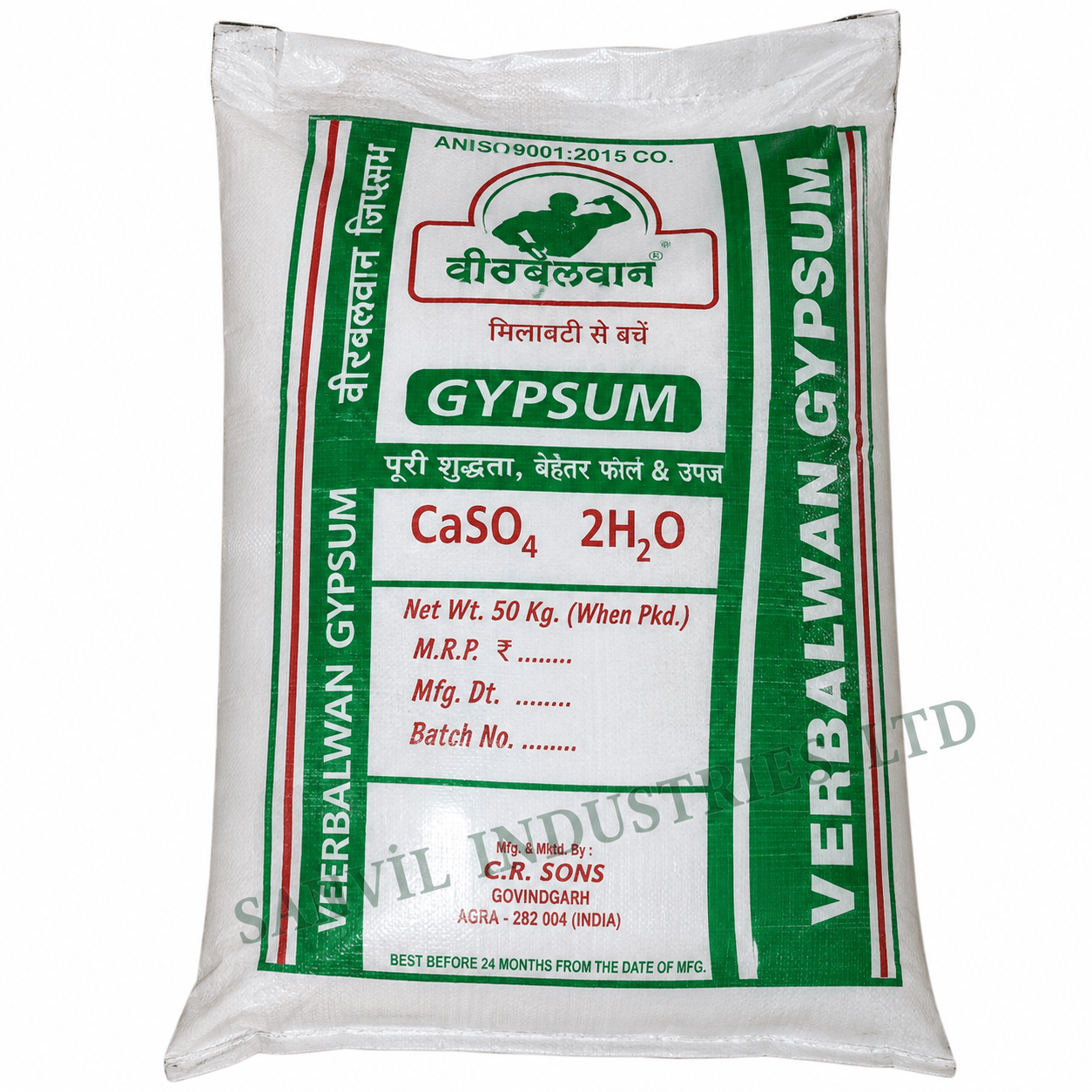
Calcium Sulphate Dihydrate (Gypsum) in Kenya
| Specification | Details |
|---|---|
| Product Name | Calcium Sulphate Dihydrate |
| Common Name | Gypsum |
| Synonyms | Calcium Sulfate Dihydrate, Hydrated Calcium Sulphate |
| Chemical Formula | CaSO₄·2H₂O |
| Grade | Industrial / Agricultural / Construction Grade |
| Appearance | White to off-white powder or crystalline material |
| CAS Number | 10101-41-4 |
| Molecular Weight | 172.17 g/mol |
| Solubility | Slightly soluble in water |
Description
Calcium Sulphate Dihydrate (Gypsum) in Kenya | Sanvil Industries Ltd
Calcium Sulphate Dihydrate (Gypsum) is a versatile mineral material widely used in construction, cement manufacturing, agriculture, plaster products, gypsum boards, ceramics, soil conditioning, industrial fillers, and selected manufacturing processes. At Sanvil Industries Ltd, we supply high-quality Calcium Sulphate Dihydrate (Gypsum) across Kenya, Uganda, and Tanzania at competitive wholesale and bulk prices, ensuring consistent quality, reliable performance, and dependable availability for industrial, agricultural, and commercial customers.
Product Description – Calcium Sulphate Dihydrate
Calcium Sulphate Dihydrate, commonly known as Gypsum, is a naturally occurring or manufactured calcium sulphate mineral with the chemical formula CaSO₄·2H₂O. It typically appears as a white to off-white crystalline powder or mineral solid, depending on its grade, source, and particle size.
Gypsum is valued as a source of calcium and sulphur, as a cement-setting regulator, and as a raw material for plaster, gypsum boards, ceiling products, moulds, and other construction materials. Agricultural grades are also used as soil amendments where appropriate.
At Sanvil Industries Ltd, we supply quality Gypsum for construction, agriculture, cement production, ceramics, and other industrial applications. Customers can request the appropriate grade and specification, supported by competitive pricing, reliable supply, and efficient delivery throughout East Africa.
Applications of Calcium Sulphate Dihydrate
1. Cement Manufacturing
Cement manufacturers add Gypsum during cement grinding to regulate the setting characteristics of Portland cement.
2. Gypsum Board Production
Manufacturers use processed gypsum as a major raw material for plasterboard, drywall, partition boards, and ceiling systems.
3. Plaster Manufacturing
Construction-material producers process Gypsum into plaster products used for walls, ceilings, moulding, and decorative finishes.
4. Agricultural Soil Conditioning
Agricultural-grade material supplies calcium and sulphur and can help improve specific soil conditions when used according to soil requirements.
5. Fertilizer Manufacturing
Fertilizer producers use suitable grades as a source of calcium and sulphur in selected agricultural formulations.
6. Soil Amendment
Gypsum can support the management of certain sodic soils by supplying soluble calcium as part of an appropriate soil-management program.
7. Ceramic Manufacturing
Ceramic manufacturers use gypsum-based materials in mould making and selected production processes.
8. Precast Construction Products
Manufacturers use the mineral in selected panels, blocks, decorative elements, and other building products.
9. Industrial Fillers
Suitable finely ground grades serve as mineral fillers in selected compounds and industrial formulations.
10. Mould and Casting Applications
Manufacturers use processed calcium sulphate materials for moulds and casting applications in ceramics and other industries.
Key Features & Benefits of Calcium Sulphate Dihydrate
1. Natural Source of Calcium
Agricultural grades provide calcium for appropriate soil and crop-management applications.
2. Source of Sulphur
Provides sulphur, an essential plant nutrient, without supplying nitrogen.
3. Effective Cement Setting Regulator
Helps cement manufacturers control setting characteristics during production.
4. Useful Construction Raw Material
Serves as an important raw material for plaster, gypsum boards, ceilings, and other building products.
5. Soil Conditioning Properties
Suitable agricultural material can support improvement of certain soil conditions when correctly applied.
6. Good Processing Characteristics
Can be ground, calcined, and processed into different calcium sulphate products for manufacturing applications.
7. Wide Range of Applications
Suitable for construction, cement, agriculture, ceramics, fertilizer, moulding, and industrial manufacturing.
8. Competitive Pricing & Reliable Supply
Sanvil Industries Ltd provides competitive wholesale and bulk prices with dependable supply throughout East Africa.
Technical Data Sheet (TDS)
| Parameter | Typical Information |
|---|---|
| Chemical Name | Calcium Sulphate Dihydrate |
| Common Name | Gypsum |
| Chemical Formula | CaSO₄·2H₂O |
| CAS Number | 10101-41-4 |
| Molecular Weight | 172.17 g/mol |
| Appearance | White to off-white powder |
| Solubility | Slightly soluble in water |
| Calcium Content | Grade dependent |
| Sulphur Content | Grade dependent |
| Grade | Industrial / Agricultural / Construction |
Why Choose Sanvil Industries Ltd
- Trusted supplier of industrial and agricultural raw materials.
- Quality Gypsum for construction, cement, agriculture, and manufacturing.
- Different grades and particle sizes available depending on requirements.
- Competitive wholesale and bulk prices.
- Reliable supply for manufacturers, farms, contractors, and distributors.
- COA and SDS/MSDS available upon request.
- Fast delivery across Kenya, Uganda, and Tanzania.
- Prompt quotations for commercial and bulk requirements.
FAQs
Q1. What is Calcium Sulphate Dihydrate mainly used for?
A: It is widely used in cement manufacturing, gypsum boards, plaster, agriculture, fertilizer production, ceramics, mould making, and construction materials.
Q2. What is the chemical formula of Gypsum?
A: The chemical formula of Calcium Sulphate Dihydrate is CaSO₄·2H₂O.
Q3. Why is Gypsum added to cement?
A: Cement manufacturers add it during grinding to help regulate cement setting and prevent excessively rapid setting.
Q4. Can Gypsum be used in agriculture?
A: Yes. Agricultural-grade material supplies calcium and sulphur and is used as a soil amendment where soil and crop conditions make its application appropriate.
Q5. Does Gypsum increase soil pH?
A: Unlike agricultural lime, Gypsum generally does not significantly raise soil pH. Its primary agricultural roles are supplying calcium and sulphur and supporting specific soil-management objectives.
Q6. Can Gypsum help sodic soils?
A: Yes. The calcium supplied by appropriate agricultural-grade material can help displace sodium from soil exchange sites as part of a properly managed reclamation program.
Q7. Is Gypsum soluble in water?
A: It is only slightly soluble in water, allowing calcium and sulphate ions to become gradually available under suitable conditions.
Q8. What packaging sizes are available?
A: We supply in bulk quantities, depending on customer requirements and availability.
Q9. Are COA and SDS/MSDS available?
A: Yes. Certificates of Analysis and Safety Data Sheets are available upon request for applicable product batches.
Q10. Which countries does Sanvil Industries Ltd supply?
A: We supply Gypsum throughout Kenya, Uganda, Tanzania, and other East African markets.
Contact Us
For quotations or bulk orders in Kenya, Uganda, and Tanzania, contact Sanvil Industries Ltd for competitive prices and fast delivery.
Sanvil Industries Ltd
📍 Location: Industrial Area, Nairobi, Kenya
📞 Phone: +254 722343016
📧 Email: sanvilindustries@gmail.com
Reviews
There are no reviews yet.